Pros and Cons of Using Patients for Simulation
Explore the benefits and limitations of real and standardised patients in healthcare education, including realism, feedback, cost, ethics, and...
Stay up-to-date with health education and EdTech sector news and updates from Virtual Medical Coaching.
Explore the benefits and limitations of real and standardised patients in healthcare education, including realism, feedback, cost, ethics, and...
How does clinical simulation work? What are the different types of clinical simulations? Check out this post to get the answers!
The effectiveness of immersive simulation technology in the medical field in improving learners’ knowledge and clinical skills.
Beyond the Simulation Lab: Introducing and using Immersive Virtual Reality Simulation
Healthcare simulation supports education, assessment, research, and system improvement while preparing students for safe clinical practice
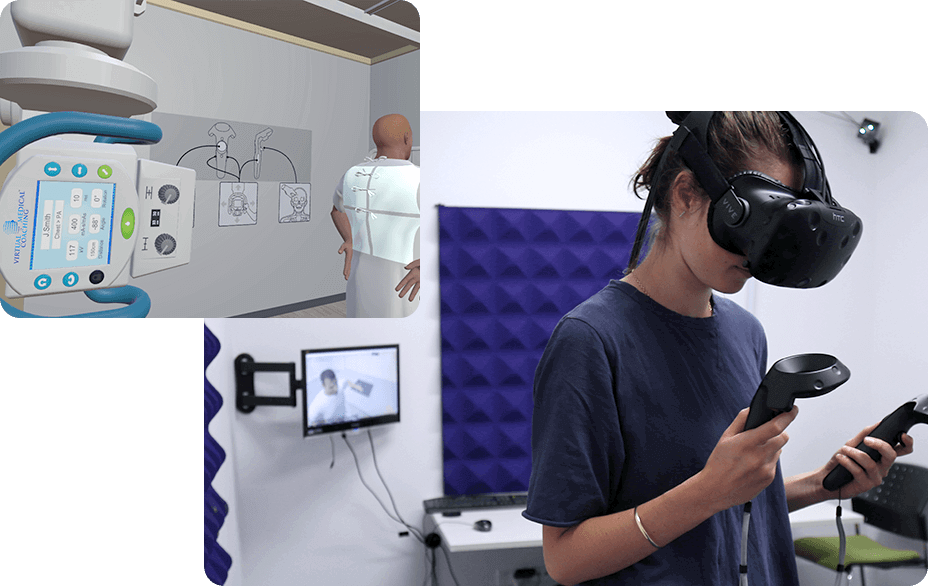
Compare physical radiography lab and VR simulation costs, including infrastructure, staffing, scalability, analytics, and student access.
Medical & healthcare institutions can use virtual patients to train, educate, and assess students.
A simulation's primary purpose is to replace real patient encounters with environments designed to simulate or replicate health scenarios.
Combining VR and physical simulation improves clinical training by aligning decision-making with hands-on skill development.
The goal of any medical imaging program is to prepare students to practice effectively as radiologic technologists in medical centers and hospitals
Subscribe to our news, updates and more.